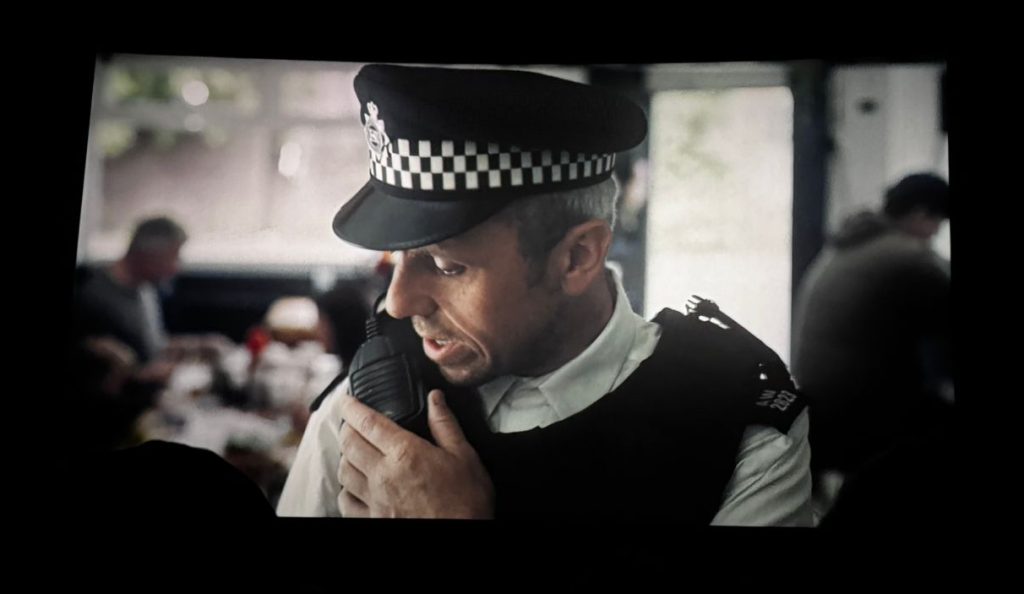
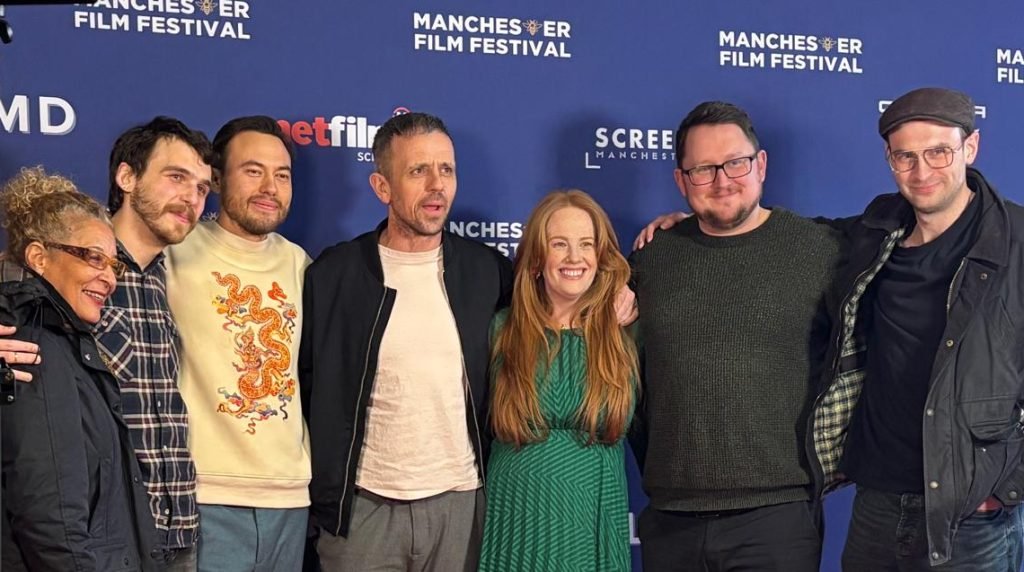
One of the most touching short films I’ve ever seen. A masterpiece of short story telling. Excellent performances from the main leads and Best Actor Manchester Film Festival for William Fox
Don’t Worry About Me is a character-driven short film exploring the shared pressures faced by both victims of crime and the police officers tasked with responding to it. Grounded in lived experience and emotional realism, the film takes a restrained approach to storytelling.
In this conversation, writer/producer Steven Louis Arnold and director Jamie Yuan discuss its origins, development, and the process of bringing the project to life on a micro-budget.
Where did the idea for Don’t Worry About Me come from?
Steven Louis Arnold: It’s a hybrid of experiences. The things I dealt with in the police—they’re not just my stories, there are victims involved, and it can feel exploitative to tell those directly.
So it was about taking the emotional truth of those moments—how I felt on certain calls—and reshaping them. There’s a degree of separation, but you’re still able to put those feelings into the characters.
Writing, for me, is the best form of therapy. It lets you process things and re-evaluate them from a slightly more detached perspective. So there’s a grain of truth in it, but it’s fictionalised.
What made you want to direct this script?
Jamie Yuan: It connected with me on two levels. First, the story itself—two characters, both shaped by their experiences, meeting in a very simple, contained setting. I love that kind of setup where you can get depth from something minimal.
And then there were the specifics from Steven’s experience. You can tell when something is written by someone who’s lived it. That gives the script a depth and quality you can’t really fake.
The film carries heavy themes, but there are lighter moments too. Was that intentional?
Arnold: Yeah, definitely. You don’t want it to be all doom and gloom. There’s always a bit of humour in real life, even in difficult situations. It’s about balance—giving the audience something to hold onto, a bit of hope.
How do you define the difference between a short film and a sketch?
Yuan: A sketch, for me, is essentially a gag—it’s a setup leading to a punchline. A short film has more purpose. It should make you think beyond the immediate moment.
Sometimes you watch shorts and feel like they could have been two minutes instead of ten. They’re just extended gags.
Arnold: Yeah, I think when it stops being about the punchline and becomes about character, that’s when it shifts into a short film. There’s definitely overlap, but the intent is different.
How did you approach casting the film?
Yuan: That was the most important part—it’s where the film would live or die. We put a call out on Spotlight and got a lot of self-tapes.
I picked specific sections of the script that required emotional depth and looked for actors who really understood the material. Then I spoke to them about their interpretation—I actually find that more useful than traditional auditions.
Keeley and William stood out straight away. And then we realised they already knew each other, which was a happy accident. That history really helped their chemistry.
The film was made on a very modest budget. How did you manage that?
Arnold: Most of went on food, travel, and basic costs. Everyone was very upfront about the situation and willing to collaborate. We just decided on a date and committed to making it, rather than waiting around for funding.
Yuan: It really comes down to community. In places like Manchester, people are willing to give their time and skills.
You edited the film yourself. How did that shape the final piece?
Yuan: My background is in editing, so it made sense, especially on a low budget. But it’s a balance. You can get too close to the material. That’s where collaboration helps. There were moments we cut, even things that worked as gags, because they didn’t serve the overall story.
Arnold: And there were choices in the edit that weren’t in the script. Like how the film opens. That wasn’t written that way, but it works better visually. It’s a good example of how writing and directing complement each other.
What role do short films play in your wider career plans?
Yuan: You’re not doing shorts for money. You’re doing them to develop your craft, build relationships, and create opportunities. That’s the real value.
Arnold: I’m trying to approach the industry from multiple angles—features, shorts, theatre. I’ve got a feature version of this script, another project designed to be commercially viable, and a few development opportunities in progress. It’s about momentum—seeing what connects first.
What do you think independent films sometimes get wrong?
Arnold: Sometimes they prioritise theme over story and character. They want to make a point so strongly that the narrative suffers. For me, the best films balance everything—they entertain, but there’s also something deeper there if you want to engage with it.
Don’t Worry About Me reflects a filmmaking approach rooted in collaboration, restraint, and lived experience. From its writing process to its production model, it demonstrates how much can be achieved when clarity of vision outweighs scale.