How Howard J. Ford’s indie creature feature went from idea to international distribution — and what it tells us about where independent genre filmmaking is heading.
There’s a version of Bonekeeper that never gets made. The version where the director waits for a studio green light, where the cave sequences are built on a soundstage, where the creature is handed off to a mid-tier VFX house and returns looking like everything else. Howard J. Ford made the other version.
Shot largely in real underground cave systems, with a creature designed by an independent Italian effects artist Ford found online, and completed from first decision to finished film in just eleven months, Bonekeeper is a useful case study in what modern independent genre production can look like when a filmmaker works with the model rather than against it. And its selection for the Glasgow Film Festival suggests the industry is taking notice.
The Eleven-Month Window
Speed is rarely discussed as a creative asset in independent filmmaking, but Ford sees it differently.
“Bonekeeper is actually quicker than normal in this regard because often it takes a couple of years to get the whole thing done and dusted. We finished post-production and screened the film 11 months after first deciding to actually do it.”
That timeline — concept to completed feature in under a year — reflects a production philosophy built around reducing friction at every stage. No development slate to navigate, no financier casting approvals, no committee notes on the creature design. The decisions were Ford’s to make, and he made them fast.
For independent producers looking at the economics of genre film, that speed has real value. It compresses the gap between creative momentum and finished product, reduces carrying costs, and gets the film into distribution windows while the market conditions that inspired it still exist.
Location as Production Strategy
The decision to shoot in real caves rather than build sets was, by Ford’s own admission, initially economic. He had studied how Neil Marshall’s The Descent, one of the most successful cave-based horror films ever made, was constructed entirely on studio sets. The quality of that work is undeniable. But for an independent production, it was simply out of reach.
“I found out The Descent was shot entirely in a studio. But we couldn’t afford a set. We had to do it for real.”
The film used locations including Clearwell Caves in the UK, where the production was granted access beyond the standard public-access areas. What began as a budget solution became a defining creative asset.
Actor Sarah T. Cohen described conditions that no set decorator could replicate. “It smelt really bad and it was really dark. If you didn’t have the torches it was pitch black. And there were literal real dead animal bones down there that ended up in the film.”
That last detail matters: the bones are in the movie because they were already there. The environment didn’t need to be dressed. It simply needed to be captured.
Danny Rahim noted that the physical reality of the location produced something that rehearsal rarely can: authentic cast behaviour. The instinctive checking-in between actors — are you alright, have you got that step — was precisely how people would respond if the danger were real. “It added to the realism of the film,” he said. “Because it was real.”
There were genuine risks too. Ford recalls a precarious boulder above the crew — held, as he tells it, by a single pebble. The production continued. The boulder held. But the anecdote illustrates something important about location-based indie filmmaking: the authenticity that audiences respond to is sometimes indistinguishable from actual danger.

Building the Creature Internationally
The monster at the centre of Bonekeeper represents perhaps the most instructive aspect of the production for industry observers: how Ford sourced and developed his key creative collaborator.
Rather than approaching established VFX houses — whose pricing would have been prohibitive and whose pipeline would have added months to the schedule — Ford discovered independent Italian effects artist Giordano Aorta through his online work. The approach was direct.
“I messaged him and said, ‘Hey man, love your work.’ We did a few tests and I realised he was the man.”
This model of international creative sourcing — a UK director, Italian effects work, assembled through online discovery rather than industry referral — reflects a broader shift in how independent productions build their teams. The traditional studio pipeline, with its preferred vendor lists and established relationships, is one route. But for filmmakers working outside that system, the internet has made a different kind of international collaboration not just possible but practical.
Ford was also clear about his creative brief for the creature: no person-in-a-suit, no shortcuts. “I always wanted to make a creature film,” he said. “A little bit of The Thing, a little bit of Alien. But I didn’t want to do a person-in-a-suit type film. I wanted to wait until the technology meant we could make bigger creatures.” The patience implied in that statement — waiting for the right moment rather than compromising on the vision — is itself a production philosophy.
Distribution: Territories First, Then Global
Bonekeeper’s distribution strategy reflects the current reality of independent genre films: build territory by territory, with the UK as anchor, then expand.
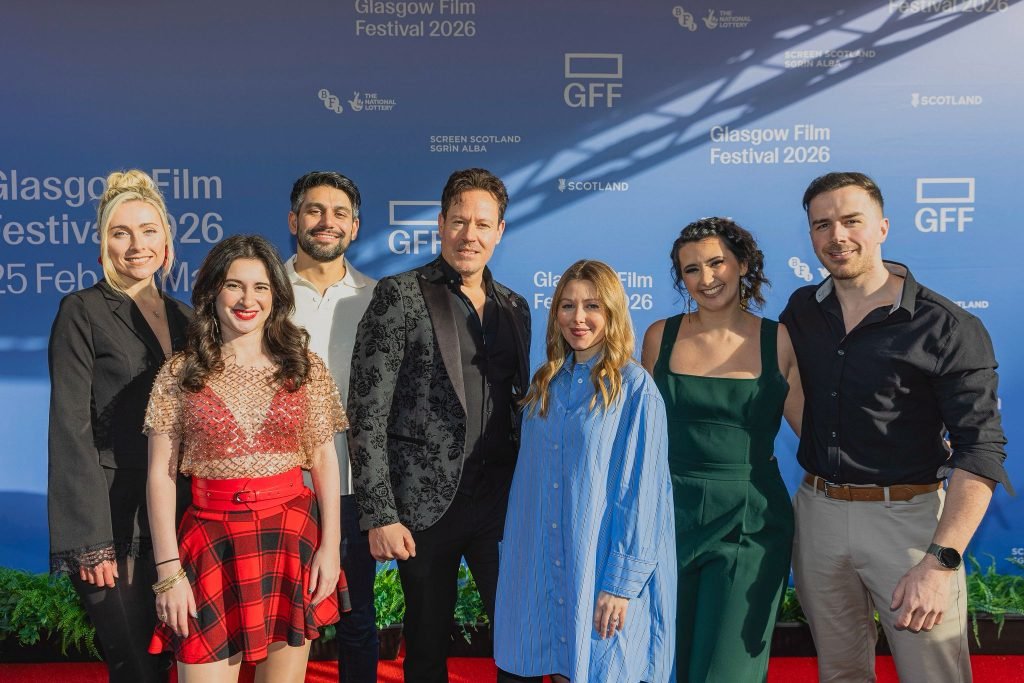
Distributor Plaion has acquired several territories including the UK, Germany, Switzerland and Italy, with additional markets to follow. The UK release — available for download and streaming from April 6th — leads the rollout, with the US expected to follow shortly afterwards. Festival exposure, including Cannes market screenings and FrightFest-related platforms, has helped build awareness ahead of the wider release.
Ford is candid about the economics of indie visibility. “We can never spend the $80 million on marketing that studio films can,” he acknowledges. For independent genre films, critical and industry coverage isn’t supplementary to the release strategy. It is the release strategy.
The Indie Casting Advantage
One of the less-discussed advantages of independent production is casting freedom. Without financiers requiring name talent or sales agents pushing for marquee value, Ford was able to assemble a cast based entirely on trust and working relationships.
“With Bonekeeper I could just work with the people I wanted to work with. Actors I’ve met over the years — some friends, some people I’d worked with before.”
Associate producer and actor Louis James describes the project’s origins with characteristic simplicity: “Howard said he was thinking of making a creature horror set in a cave. I told him — just do it.”
That kind of directness — idea to commitment in a single conversation — is only possible when a filmmaker has built the relationships that make it possible. It’s also a reminder that the long-term value of independent production isn’t just the films themselves but the network they build around them.
It’s a film made by people who went somewhere most productions wouldn’t, endured what most crews wouldn’t, and came back with something that proves passion and commitment still hit harder than any studio budget ever could.
Written by Susanda Wolf